






A Comparative Look at Two Major Shakespeare Films
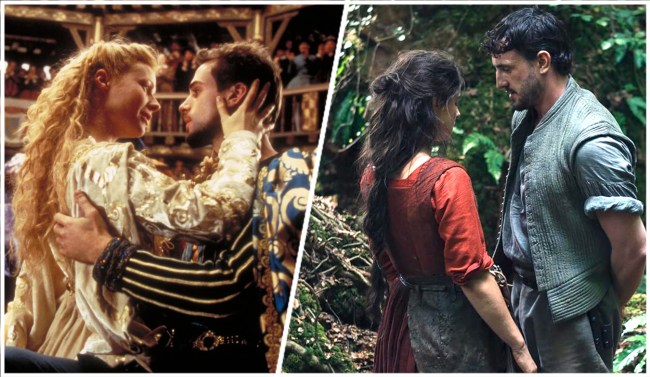
Movies about William Shakespeare will never be as commonplace as movies based on the master playwright’s many beloved works, but Chloé Zhao’s devastating new drama Hamnet marks the subgenre’s second film in three decades that stands to be a major Oscar contender. The first, of course, was John Madden’s 1998 entry Shakespeare in Love, a charming and sweet imagining of its titular premise, sure, but also more (in)famous 27 years later for being one of the most controversial Best Picture winners of all time.
In the years between Shakespeare in Love and Hamnet there have only been a few, mostly forgettable looks at the life of the Bard, like 2018’s Sony Pictures Classic release All Is True starring Kenneth Branagh. We’re ignoring those.
As Hamnet racks up near-universal praise from critics and now looks primed for a Best Picture showdown against Paul Thomas Anderson’s propulsive thriller One Battle After Another, we look at the major differences (and a couple similarities) between Zhao’s film and the last major Shakespeare “biopic” to win over the Academy.
Plot and Setting
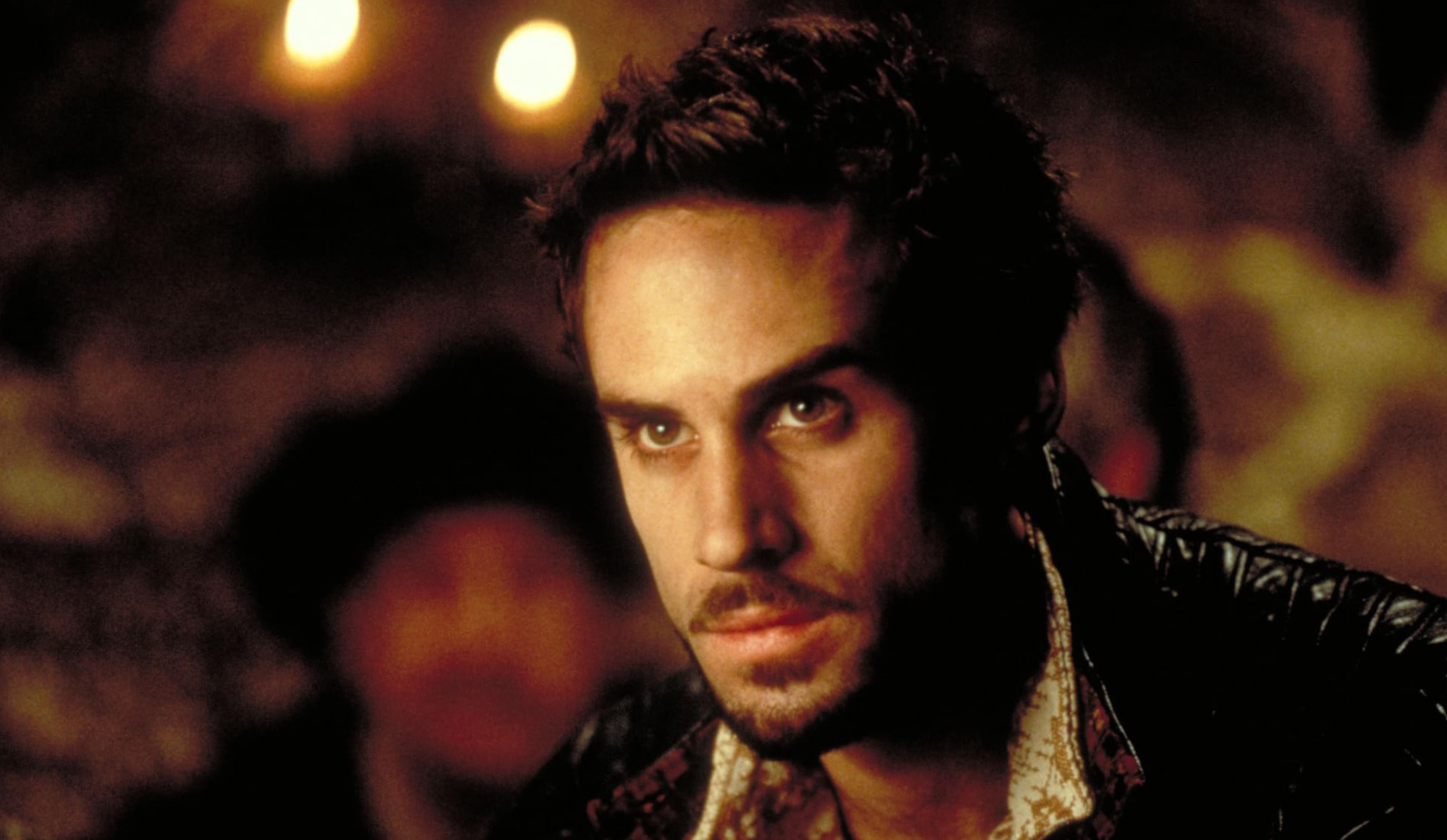
Set in London circa 1593, Shakespeare in Love follows a late-20s Bard (Joseph Fiennes) desperately attempting to maneuver his new comedy in the works, Romeo and Ethel, the Pirate’s Daughter, from the failing Rose Theatre to the rival Curtain Theatre. In the process he falls for Viola de Lesseps (Gwyneth Paltrow), a wealthy merchant’s daughter and aspiring actor who poses as a man (since women were not allowed to perform) while auditioning for the show. (It’s believed that the play it would become, Romeo and Juliet, premiered in 1595.)
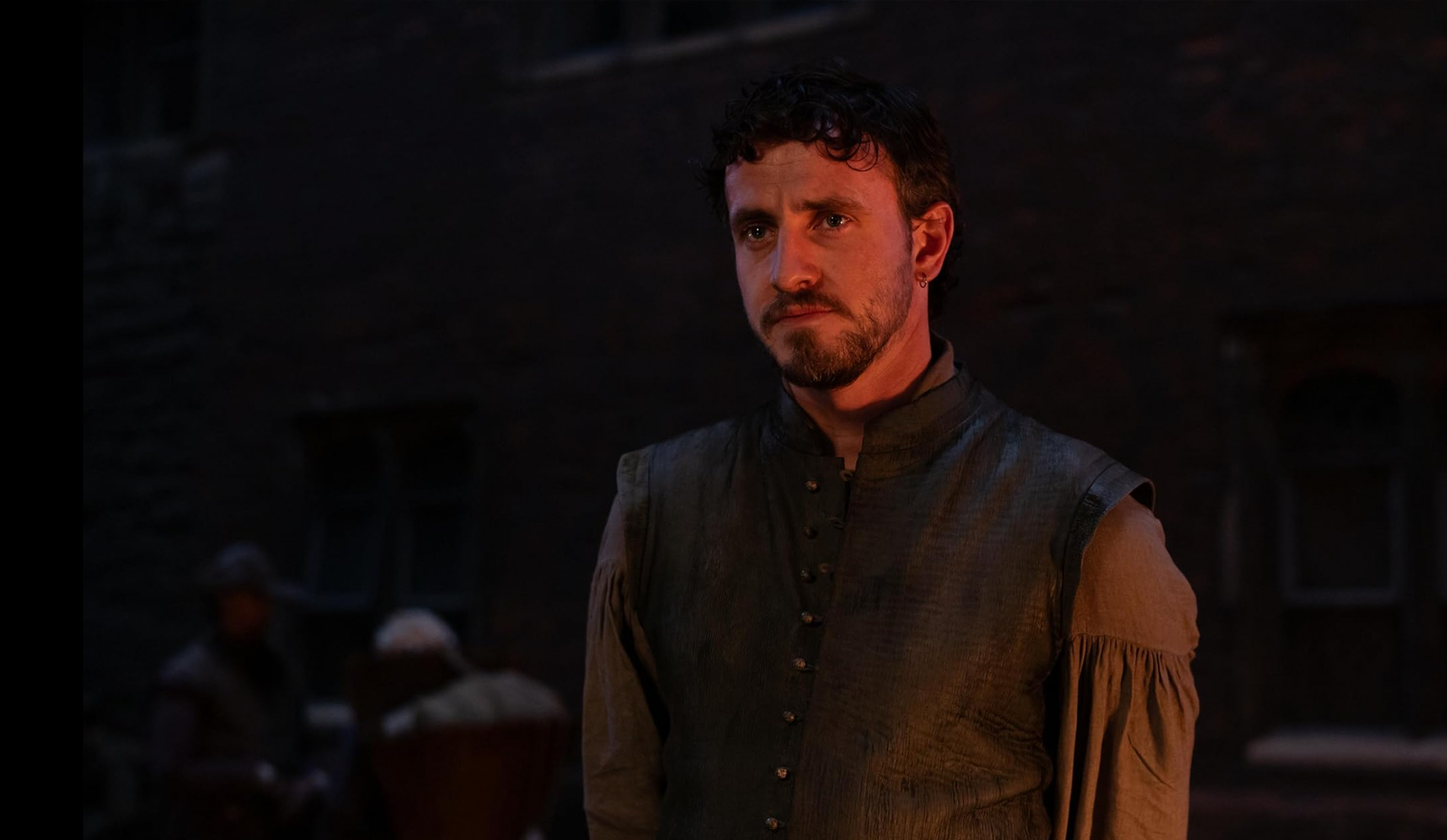
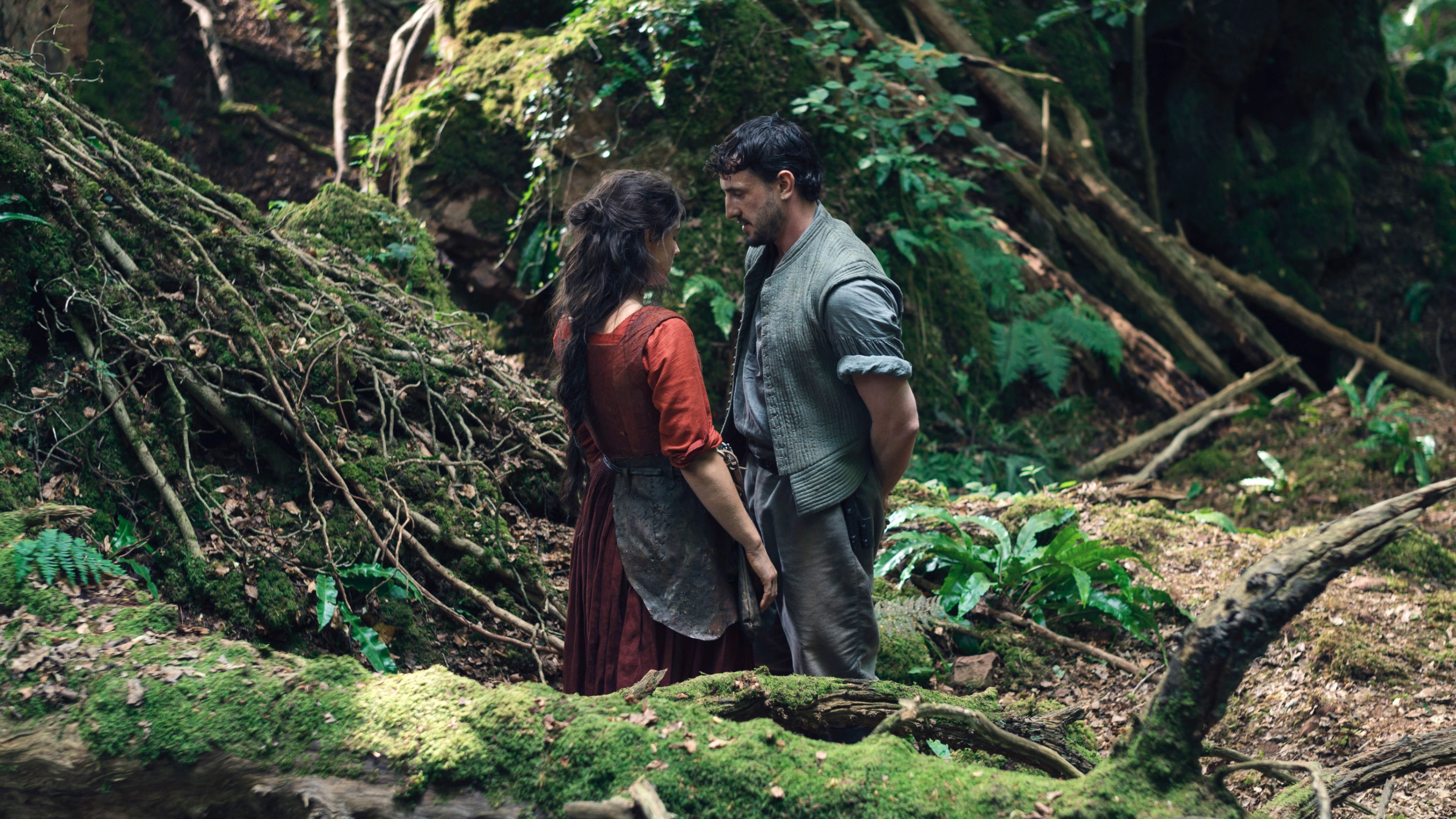
Timed over a more expansive period, Hamnet begins around 1581 as the son of a glove maker Shakespeare (Paul Mescal) meets and woos Agnes Hathaway (Jesse Buckley), the eldest daughter of the family whose younger children he provides Latin tutoring to pay off his father’s debts. We follow the pair’s family life as they have three children through 1596, when their young son Hamnet (Jacobi Jupe) dies of the bubonic plague, and the subsequent premiere of Hamlet, believed to be between 1599 and 1601.
As you can tell from its conflicting events, the films obviously do not take place in the same timeline.
Source Material
Shakespeare in Love was based on an original screenplay by Marc Norman and Tom Stoppard. Norman wrote the film’s early drafts, first envisioned as an “American spin” on Shakespeare that focused on his evolution from an everyday playwright to master of the craft. Stoppard rewrote the script into its final form.
Hamnet is based on the award-winning 2020 novel of the same name by Maggie O’Farrell. It was adapted for the screen by Zhao and O’Farrell.
Tone
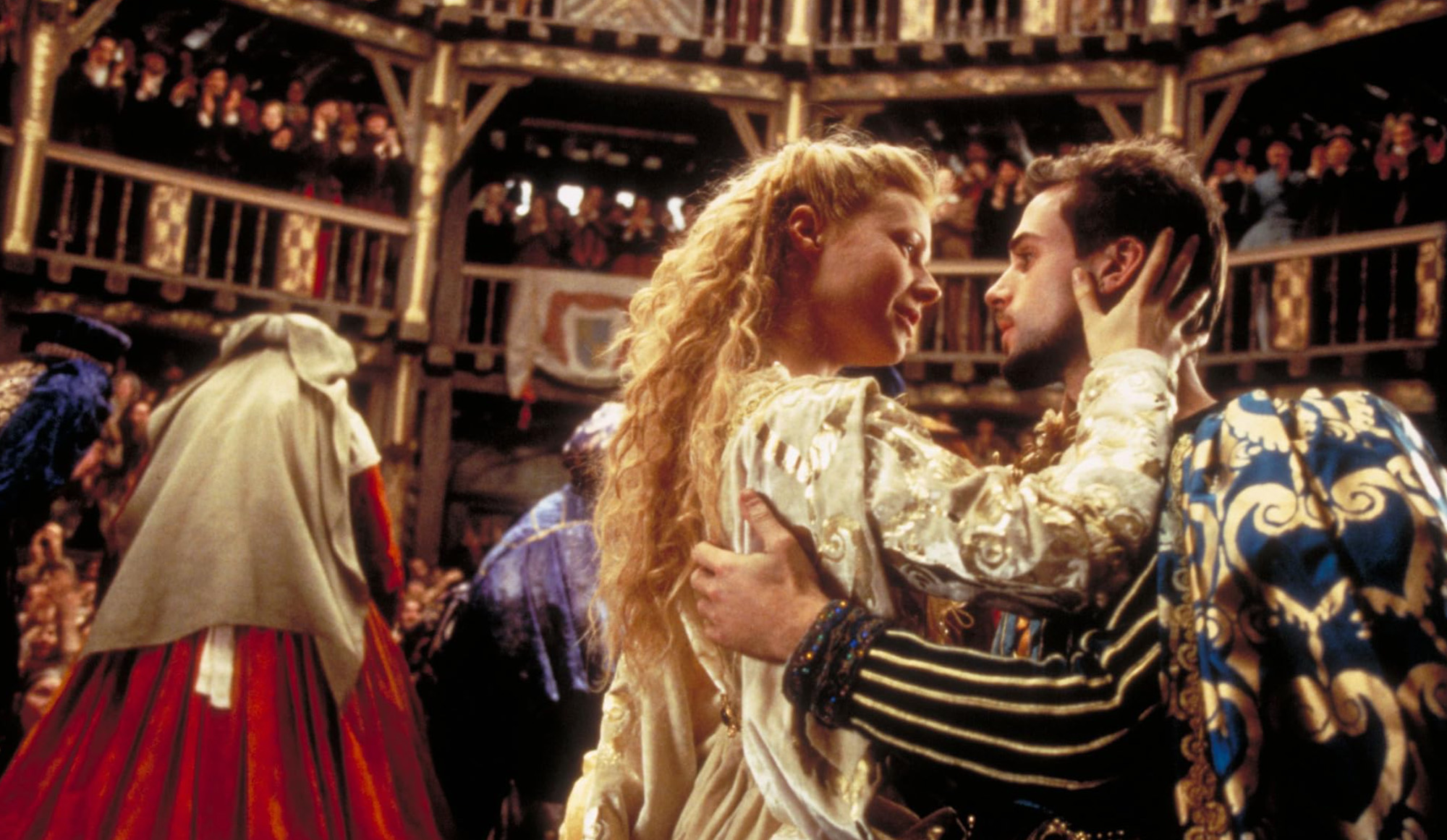
Here’s where these films wildly differ. Though it’s brimming with wit, Shakespeare in Love is a lighthearted historical rom-com, like a Richard Curtis romp set four centuries earlier. While the play it memorializes was of course a tragedy, the movie is more interested in folly, with jabs targeted at its antiquated times (“That woman, is a woman!”) and countless in-jokes that nod at the life and broader works of the Bard, even if it’s not resolved with a “happily ever after” climax.
Hamnet, by contrast, is a searing drama that’s made audiences weep since its world premiere at the Telluride Film Festival in August. There are some lighter moments, sure – most notably during William’s pursuit of Agnes in the first act, and with the precocious twins Hamnet and Judith. But Hamnet’s gut-wrenching death is one of the most brutal and agonizing things you’ll see on a movie screen this year. Thank goodness for the film’s cathartic release in its final minutes as the play Hamlet premieres.
Depiction of Shakespeare and His Love Life
In Shakespeare in Love, the Bard is depicted as kind of a player: charming, witty, devilishly handsome. Before he meets Viola, he attempts to seduce Rosaline (Sandra Reinton), who, according to the film’s mythology, would inspire Juliet’s Capulet cousin in R&J. He has a lot more luck, and intent, with Viola, which of course satisfies the film’s fairy-tale central premise. The movie might feel like a betrayal for viewers to revisit after Hamnet, though, since Agnes (historically known as Anne Hathaway) is barely mentioned. She is, albeit briefly, when Henslowe (Geoffrey Rush) lets slip to Viola that Shakespeare is married, though now separated from his wife. While their relationship was often long distance, Shakespeare and Hathaway never actually separated; they were married until his death in 1616.
In Hamnet, Shakespeare is a lot less smooth (though just as handsome!). At 18, he’s certainly confident as he approaches the older Agnes (26), who at first denies his advances. But he’s still a bit tongue-tied with her, clearly better at the written word than in-person flirting. The ensuing relationship between William and Agnes feels, well, far more dramatical than rom-commie. It’s tender and sweet, but constantly challenged, especially as Shakespeare begins to find success as a playwright and Agnes has zero interest in relocating from the country to London. It’s really put to the test, however, when Hamnet dies, and a heartbroken Agnes resents William for not being there to comfort them.
Shakespeare’s Muse
In Shakespeare in Love, it’s Viola de Lesseps who not only inspires the evolution of Romeo and Ethel to Romeo and Juliet, but the main character in his next work as well. After Queen Elizabeth I (Judi Dench) tells him to “write something more cheerful next time,” Shakespeare begins work on Twelfth Night, in which we meet the castaway Viola – a gentlewoman shipwrecked in Illyria who disguises herself as a boy.
In Hamnet, it is of course Hamnet. The film plays with the time frame, with Hamlet premiering not long after his son’s death, while it’s generally believed the play was first staged around six years after the boy’s death. Yet it’s pretty obvious from both the play’s title and the plot and themes involving a father and son that it was indeed the heartbreak over losing Hamnet that inspired Shakespeare to pen one of his greatest masterpieces.
The Facts
Here’s where these films are a lot more alike. Neither can claim pure biography for the simple fact that the intricate details surrounding Shakespeare’s personal life weren’t all that well documented; so both ultimately blend historical facts (or at least characters) with lots of fiction.
Shakespeare in Love’s love interest Viola de Lesseps wasn’t even a real person, we’ll start there. Romeo and Ethel wasn’t a thing, either; the author’s main inspiration was Arthur Brooke’s 1562 poem, The Tragicall Historye of Romeus and Juliet, which itself was based on older Italian tales. There also hadn’t been an Earl of Wessex (Colin Firth’s villain) since 1066. So what did it get right? Um, Shakespeare was a real person. OK, so were Christopher “Kit” Marlowe (Rupert Everett) and Queen Elizabeth I, though their mythologies are distorted as well. Marlowe was killed in a pub brawl, possibly over a bar tab, but it most likely was not an accident as in portrayed in the film. Meanwhile, there’s no evidence that Shakespeare and the queen ever met IRL.
When it comes to truthiness, though, Hamnet definitely has the edge in that all of its central characters did also exist in real life. But the brunt of the story was still born from O’Malley’s imagination. We don’t actually know how William and Agnes/Anne met. And while it is known that Hamnet died in 1596, the film imagines that it was his twin sister Judith who got sick first, and he somehow absorbed the illness from her. There are other slightly supernatural elements as well, mostly involving witchcraft and Agnes’s extra-sensory abilities, like foreseeing herself on her deathbed with only two children by her side. The film’s climax, with Agnes’s revelation as she watches the first performance of Hamlet that her husband used playwrighting to turn their grief into a healing mechanism by keeping their son’s spirit alive, almost certainly didn’t happen, unfortunately.