







The Life and Legacy of Stanley Kubrick
Stanley Kubrick, one of the most influential filmmakers of the 20th century, was known for his meticulous approach to filmmaking and his ability to craft visually stunning and thematically profound works. While many have written about his films, few have drawn a direct connection between his personal life and the artistic philosophy he espoused. One such philosophy is that of Gustave Flaubert, who once advised, “be regular and orderly in your life, so that you may be violent and original in your work.” This advice seems to have been central to Kubrick’s creative process.
Kubrick was often described as reclusive, but this characterization only partially reflects the truth. Born in New York in 1928, he eventually moved to England, where he remained for much of his life. Despite setting some of his most famous films in locations like a haunted Colorado hotel (The Shining) or Vietnam (Full Metal Jacket), he chose to live in England. His three marriages, while notable, were overshadowed by the long-term relationship with his third wife, Christiane Harlan, whom he married in 1958 and remained with until his death in 1999. Together, they raised three daughters and had many pets, including several dogs.
While it might be unkind to call Kubrick a hermit, it is accurate to say that he valued a quiet, structured home life. This stability allowed him to create films that are both visually and thematically intense, such as Dr. Strangelove (1964) and 2001: A Space Odyssey (1968). These films explore themes of madness, folly, and terror, yet they are crafted with precision and care.
Eyes Wide Shut: A Personal Reflection
Kubrick’s final film, Eyes Wide Shut (1999), is perhaps his most personal work. It is also the first and only time he directly addressed the impact of domestic life on his creative process. The film, now available in a new 4K UHD and Blu-ray restoration by the Criterion Collection, offers a unique insight into Kubrick’s mind and values.
Released four months after Kubrick’s death, the film received significant media attention. It was featured on Entertainment Tonight, The Today Show, and Time magazine, with Roger Ebert dedicating an entire episode of his movie review show to it. Ads for the film were ubiquitous, and even Chris Isaak appeared on late-night talk shows discussing Kubrick’s use of his song “Baby Did a Bad Bad Thing.”
However, the true significance of Eyes Wide Shut lies in its autobiographical elements. Based on Arthur Schnitzler’s Traumnovelle, the film follows Bill Harford (Tom Cruise), a physician whose comfortable family life is disrupted when his wife, Alice (Nicole Kidman), reveals a past fantasy of infidelity. This revelation sets off a chain of events that leads Bill to explore the darker underbelly of society, ultimately leading to a realization about the importance of commitment and stability.
A Kafkaesque Journey
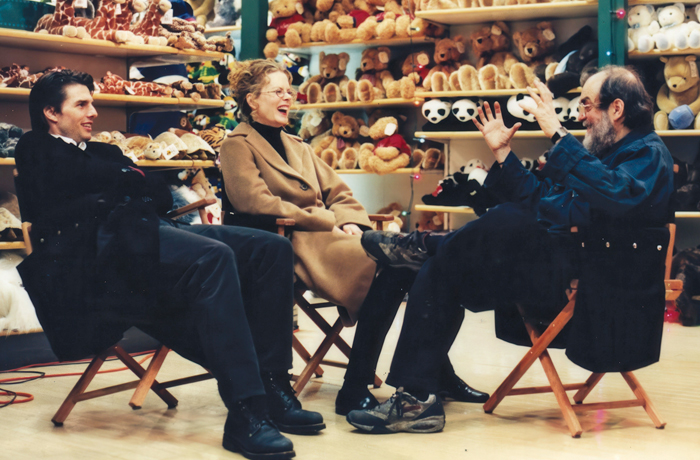
Eyes Wide Shut is not just a story about Bill’s adventures; it is a deeply introspective exploration of human relationships and the consequences of straying from one’s path. Kubrick’s portrayal of Bill’s journey through a masked-ball orgy and encounters with prostitutes is reminiscent of Kafka’s surreal narratives. The film ends in a toy store, symbolizing a return to innocence and the reaffirmation of family bonds.
This ending is a stark contrast to the ironic conclusions of Kubrick’s earlier films, such as A Clockwork Orange or Full Metal Jacket. Instead, it offers a genuine sense of reassurance, emphasizing the value of monogamy and the importance of honoring one’s commitments.
The Criterion Collection Restoration
The Criterion Collection’s restoration of Eyes Wide Shut includes a wealth of special features, such as interviews with cameraman Larry Smith and set decorator Lisa Leone. These additions provide valuable insight into Kubrick’s creative process and his attention to detail. The restoration also highlights the tactile textures present in the film’s original 35mm prints, preserving the visual integrity of Kubrick’s vision.
In conclusion, Eyes Wide Shut stands as a testament to Kubrick’s belief in the power of regular and orderly lives. It serves as a reminder that staying true to one’s commitments and avoiding unnecessary risks can lead to a more fulfilling existence. Through this film, Kubrick not only reflected on his own life but also offered a message that remains relevant today.