




On December 4, the Honors Winter 2025 ceremony will celebrate the creators and stars responsible for crafting some of the year’s best films. Curated and selected by the editorial team, Honors is a celebration of the filmmakers, artisans, and performers behind films well worth toasting. In the days leading up to the Los Angeles event, they are showcasing their work with new interviews and tributes from their peers.
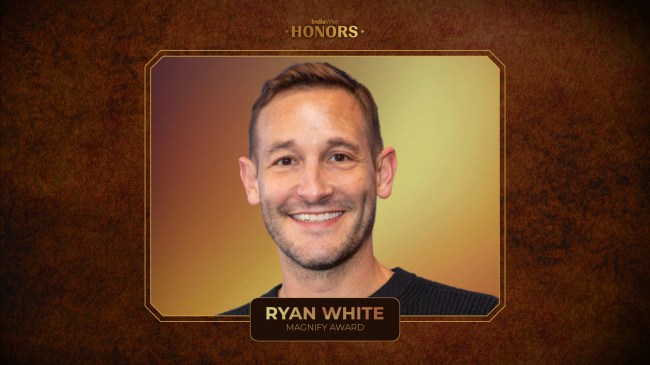
Documentarian Ryan White doesn’t play favorites with his work. But the recipient of this year’s Honors Magnify Award will tell you now that his most recent documentary, “Come See Me in the Good Light” – about the life of the extraordinary genderqueer poet laureate Andrea Gibson and their writer wife, Megan Falley – is something special. It was something to treasure even before Gibson passed away in July, nearly five months after the film premiered at Sundance, capturing audiences in its grip.
“We had a screening in New York maybe a month ago, and it was the first screening since Andrea died,” White said during a recent interview. “Megan wanted to watch the film and Jessica [Hargrave, White’s producer and lifelong best friend] held her hand throughout the film. Megan cried a lot, and Megan’s not a crier. The way she described it was, ‘Andrea just feels so alive in the movie.’ She wanted to reach into the screen and pull Andrea back out. That’s how I feel, too.”
Even now, White still can’t quite reconcile that his friend is gone. In some ways, they’re not.
“Jess and I weren’t there when Andrea took their last breath. We saw Andrea a week before they died, which was very special. And honestly, we didn’t see it coming. I don’t know how you’d measure those things, but it wasn’t somebody that I would say, in a week, their body won’t exist anymore,” White said, explaining that he and Hargrave both thought they’d have the chance to see Gibson again. “I haven’t wrapped my mind around that Andrea is dead, because Andrea has always felt so alive to me.”
He added with a smile, “Megan and Andrea have made me way more woo-woo than I’ve ever been in my life, and so, I just feel Andrea always around me. I’m still coming to terms with that, and I’m talking about Andrea all the time right now … Something about this feels far more than just a movie. To me, it feels like a gift that I was given.”
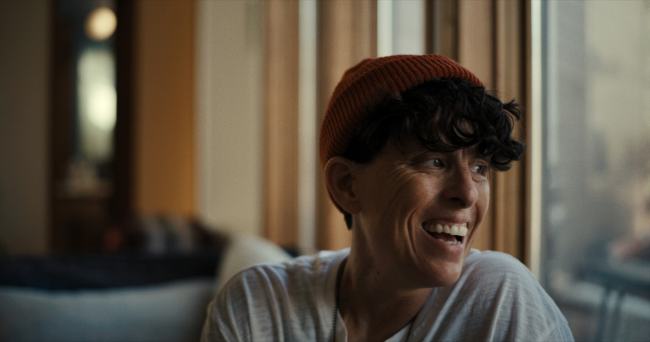
White can thank fellow “Come See Me in the Good Light” producer Tig Notaro for that gift. For years, he said, he and Hargrave had been trying to find a project to work on with the multi-hyphenate. Hargrave and Notaro go way back, having met nearly 15 years ago, when Hargrave was managing a tour for Sarah Silverman that Notaro was the opener for.
“We’ve been saying to Tig for almost 13 years, ‘Bring us a funny idea for a film!’ She’s thrown out ideas over the years, and when she called a couple of years ago with this idea, it sounded like the opposite of a funny film,” White said. “Leading with the words ‘cancer’ and ‘poetry’ doesn’t exactly scream ‘Will Ferrell comedy,’ but she said, ‘Hear me out, this is one of my best friends.'”
The pitch?
Andrea Gibson, basically. Notaro sent White and Hargrave videos of some of Gibson’s performances, including one of the love poem “Guardian Angel Fish.” “Jess and I watched it, and we were blown away,” White said. “It was not what our preconceived notion of poetry was. I would argue that Andrea’s art form spans many different genres of art, including stand-up comedy and music and storytelling.”
Notaro told them that Gibson was “the rock star of poetry,” which sounded like an oxymoron at the time. “But we’ve now discovered that was true,” White said. “And Andrea was one of the funniest people [I’ve met in] my entire life.”
Notaro, ever meticulous, also shared a podcast interview that Gibson had done with Glennon Doyle and Abby Wambach, who ended up becoming executive producers on the project and whom White still calls their “fairy godmothers” to this day. “Glennon and Abby called that episode the hardest conversation they’ve ever had, and their podcast is literally called ‘We Can Do Hard Things,'” White said. “I remember listening to it, being very afraid because Andrea was so in touch with mortality and death, and that’s something that has always scared me.”
But White knew better than to run from his fears. He and Hargrave have been doing this long enough to understand what can happen when they take a leap into something scary: It can get them somewhere new and worthy. “We said to Tig, ‘If Andrea wants to do this and they want to meet us, we’ll fly there and meet them,'” he recalled.
Days later, White and Hargave were on their way to meet Gibson and Falley at their home in Colorado. “I was afraid of both of them,” White admitted, “because I felt very uncomfortable with mortality, but I also felt very invasive at the beginning – just coming into [someone’s house] who had this incurable diagnosis and knew that they were end of life. I was just walking on eggshells like crazy.”
Gibson and Falley didn’t feel the same way, instantly opening up their home and lives to White, Hargrave, and the film crew. More than that, they did it while still being themselves.
“The best example of how quickly they disarmed us was that scene in our film, which is probably the funniest scene, about the fingering and the thumbing,” White said. “That was the first night of filming. That was the night that we met them! Jess and I were looking at each other while that scene was going on with huge eyes like, ‘Oh, my God, this is special to the nth degree in a way that we never predicted.'”
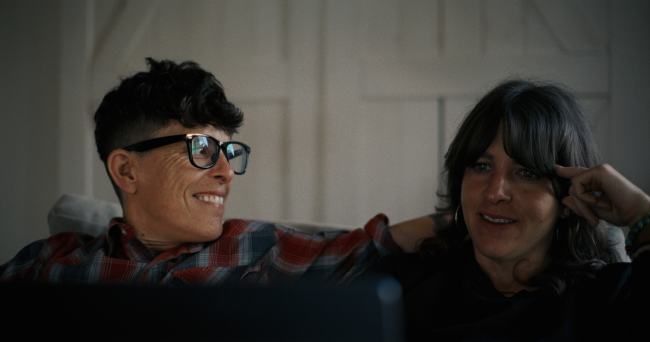
Gibson was diagnosed with ovarian cancer in August 2021. It recurred in May 2023, at which point their illness became terminal. But there was no fuss or muss about letting White into what was unfolding.
“There was never even that warm-up period that I understandably have to go through with people,” the filmmaker said. “From Day 1, these two unicorn people were just ready to go all in. For me, it was by far the most special experience of my entire life, not just my career, getting to spend this year with them. We felt that from the very first shoot.” White and Hargrave spent the flight home in tears, something, he said, they “never do with each other.”
The documentary was shot over the course of a year, from January 2024 through January 2025. White and his team would visit for about four days on three-week cycles. That “was when Andrea was getting chemo, but was also getting a result from the previous chemo,” White explained. “As they say in our film, they would basically find out if they were going to live or die on those three weeks, and we would come for that.”
Because of the quality and sheer amount of time they spent with Gibson and Falley, White and his team quickly formed a significant bond with the couple. “Whenever Andrea woke up, we would get a text saying, ‘Come over,’ and we were there until they went to bed,” White said. “The days were very long and we never left the house. We formed this little family, because they were so quarantined because of Andrea’s diagnosis. We were all very in touch with each of our individual emotions and collectively with one another.”
White recalled how, during filming, the crew would just tiptoe up to Gibson’s bedroom and start conversations. And that was just how it was to be around Gibson and Falley. As is obvious in White’s aching, deeply personal film, they didn’t put up any walls.
“I get asked a lot about, was there anything off-limits? Was there anything where it was just like, ‘Please cut the cameras, this is too much’? Literally, never,” White said. “Everything that Andrea went through was in limits.”
Pointing to Gibson and Falley’s shared calling, he added, “Megan has said that, as spoken word artists, their careers have been spent being professional exhibitionists with their trauma, with their feelings, with their joy, and their pain. What’s so amazing about Andrea and Meg is it doesn’t feel like they’re doing it performatively.”
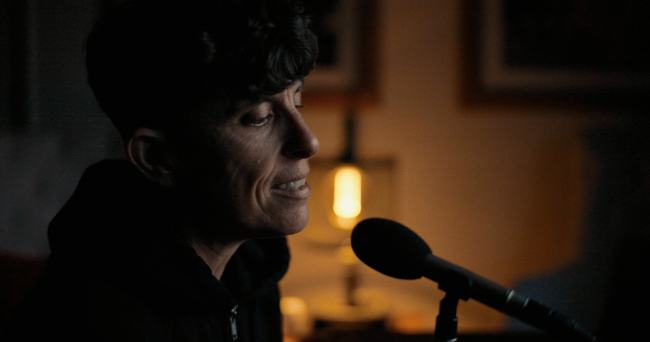
Everyone involved in ‘Come See Me in the Good Light,’ including White, Gibson, and Falley, expected the film would end with Gibson’s death. Gibson, in trademark style, was open, accepting, and very funny about it.
“Andrea never thought that they were going to see this film. I told them, from the beginning, it’s going to take years to make a film. They knew that they probably didn’t have years left,” White said, recalling how the first thing that Gibson said to him when they met was a playful, “I guess you’re going to be with me when I die.” “Andrea would joke, whenever they got good cancer marker results, ‘Oh, Ryan, I’m really ruining your film here. Do you have the budget to keep going?'”
And, yet, even as they kept filming, it didn’t feel like they were building up to some tragic goodbye. White credits his editor, Berenice Chavez, for noticing the shift first. “It was dawning on her first, because she was cutting all the footage at a turbo speed while we were shooting,” he said of Chavez. “She kept saying, ‘It doesn’t feel like a death. It doesn’t feel like it’s what it’s about.’ I think Andrea knew that all along, but was waiting for me to have the light bulb [moment].”
White didn’t tell Gibson and Falley he was submitting the film to Sundance. (The cut he submitted was not the final cut, but close to it.) He and Hargrave didn’t even tell the couple the film was in good enough shape to be sent to anyone until it was accepted into the festival. When they did deliver the news, Gibson sobbed. “Andrea was really confused, saying, ‘I don’t understand, Ryan. Are you telling me our movie, about us, is almost finished, and that if I survive for six or seven more weeks that I might see it?’ And that, obviously, ended up being the reality, which was a dream come true for all of us,” White said.
“Come See Me in the Good Light” premiered at Sundance on January 25, 2025, to a packed house at the Library Theater. A smash hit almost immediately, the film went on to win the festival’s Festival Favorite Award, as voted on by audience members.
“I’ve loved every movie I’ve made, I’ve loved getting to make literally every single one, and every experience has been so special. But that Sundance premiere for me is No. 1, just my No. 1 filmmaking experience, getting to be in that room,” White said. “Normally, I’m so nervous heading into a Sundance premiere, it’s just so much, and you finished your film so fast. And this film was unsold, so there was so much riding on it, which I had never done at Sundance. And I just wasn’t that nervous.”
White said he didn’t know how it was going to be perceived, who would come, what they would take from it. I happened to see an early cut of it, and told White and Notaro how wonderful it was when they came to visit our studio days before its premiere. “You were one of the first people that reacted to it, besides the Sundance programmers, where we were like, ‘Maybe it’s good?'” White said with a laugh. “We love it. We loved making it. We thought Andrea and Meg were hilarious and powerful. But we didn’t know; we thought, ‘This is going to be a tiny little film that maybe no one will be interested in.'”
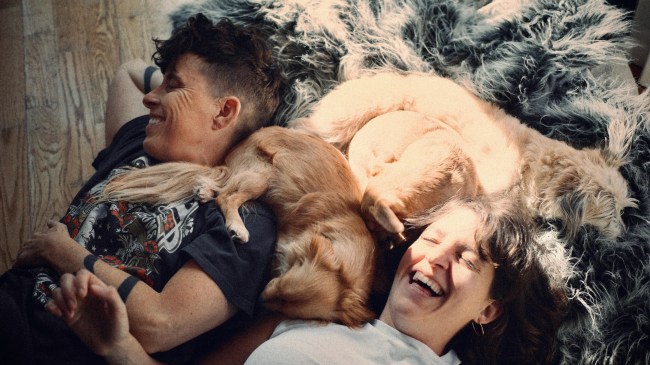
At the premiere, White and Gibson stood at the back of the theater to watch the audience view the film. “Tig joked later that it did play like a Will Ferrell comedy,” White said. “But watching it in a theater with, what, 500 people and hearing the laughter, and then obviously feeling the other side of emotion, the tears, the heartbreak, it was intense in the best of ways.”
“Intense in the best of ways” is also how White thinks of Gibson and Falley – whom, he said, have taken him to “a place of vulnerability” that he’s never experienced and wasn’t prepared for. Watching the audience experience something akin to that at the premiere, to feel that kind of vulnerability and then see the credits roll, is something that still seems to leave him speechless.
“Most people in that room were not Andrea fans, so they don’t know if Andrea is alive or if they’re dead,” White said. “And so, for the end credits to play, and then for Andrea to walk up … It was like the embodiment of that rock star comment that Tig had made to us at the beginning: This is the rock star of poetry.”
Even all these months on, even after everything that has happened, everything that has been gained and lost and celebrated and mourned along the way, White retains a crystal-clear vision of Gibson in those moments.
“What I love about Andrea is I don’t think they cared about awards or if it got bought or about any of the traditional measures of success that we use. That was just more of a curiosity to them. But getting to see it with one audience in a room?” White said, describing how Gibson hadn’t dared to dream that they’d get to see the film, much less see other people reacting to it. “I think Andrea knew people are going to be impacted, people are going to be changed after they watch it. So it was the best. It really was.”
The morning after our interview, I ran into White at the Delta SkyClub at LaGuardia. We laughed at the serendipity of seeing each other twice in less than 18 hours. He was on his way to Florida for his father’s eightieth birthday. I was heading to Georgia for the SCAD Savannah Film Festival. Life, as it tends to do, rolled on. But as we said goodbye, I noticed something around White’s neck I had not made out during our Zoom call: a thin gold chain, a nameplate in its center, “Andrea” spelled out in looping gold script.
“Come See Me in the Good Light” is now streaming on Apple TV.