




What Makes a Trilogy?
A trilogy is initially easy to define: it’s a story made up of three parts, and, when you’re looking at cinema, it’s an ongoing narrative (again) made up of three movies. If the movies were released separately, they can count as a trilogy, regardless of whether all three movies were actually shot back-to-back, or if one movie was successful and then production started on two more sometime later.
What gets complicated is the idea of trilogies that were trilogies for a while, but then got further installments. They won’t be counted here, so that’s why you won’t see some examples like:
- Star Wars (which had a 9-film “Skywalker Saga”),
- Toy Story (which got a fourth film and an upcoming fifth one),
- Captain America,
- The Dark Knight trilogy just missed out. The second film is obviously immense, and an all-timer, but the other two are both lacking in certain regards. And, yes, there is at least one example below where one film lacked in comparison to the other two, but those other two were too good to overlook the overall trilogy.
Otherwise, consistency and completeness (just three movies) were the main factors considered for the ranking below.
Spider-Man (2002-2007)
You could get a little technical and say there are far more than three Spider-Man movies, and that one of them – 2021’s Spider-Man: No Way Home – even featured Tobey Maguire reprising his role as his universe’s version of Peter Parker/Spider-Man. But there are three Spider-Man movies focused on him, and all three were directed by Sam Raimi, and that’s the trilogy being considered here.
These three were all important for the superhero genre, with the first elevating things considerably and showing how a big-budget comic book movie could work in the 21st century, while the second was, like, honestly a perfect movie. As for Spider-Man 3? It’s the weakest of the trilogy, but still has its fair share of moments, and is honestly really entertaining, even if messy. It’s aged better than you might’ve expected it to, too.
Back to the Future (1985-1990)
Back to the Future initially worked almost perfectly as a standalone thing, putting an entertaining and humorous spin on time travel with a plot about a young man forced to manipulate the past so that he can still exist (which involves interacting with younger versions of his parents). Oh, and since he’s also back in time, he has to simultaneously work out how to, you know, get back to the future.
Sequels might’ve seemed risky, but a second and third film were both produced close together and released one year after another. The second movie was sort of more of the same, but also a whole lot more complicated, with it going to the once-considered futuristic year of 2015. And then the third movie was a comedic Western, because why not? The sequels are fun and creative, while the first is a classic, so you get a pretty satisfying trilogy here overall.
The Apu Trilogy (1955-1959)
If you watch any of the films in the Apu Trilogy on their own, they make for solid family dramas, each focused on the titular character at different stages of his life. So, the first film is about a young boy, the second is about an adolescent, and then the third is about a young adult trying to make his way in the world without his family anymore.
The Apu Trilogy has several actors playing Apu at the different stages of his life, and the act of watching the trilogy in totality is remarkable. But then, of course, you add them all together, and the effect is a bit like watching a more expansive (and also more dramatic and oftentimes heartbreaking) Boyhood, which is more slice-of-life and experimental with its long production. The Apu Trilogy is filmed more traditionally, and has several actors playing Apu at the different stages of his life, but the trilogy in totality is remarkable, and all three films continue to hit hard despite them being 70 (or close to it) years old at this point.
Evil Dead (1981-1992)
Not just because of all the bloodshed, but the Evil Dead films are messy on a tonal front, too. But there’s a purpose to the messiness, and seeing the whole thing progress from straightforward horror in the first movie, to an even blend of comedy and horror in the second movie, to all-out slapstick chaos and silliness in the third movie with almost no horror is a sight to behold.
It also means the films themselves are hard to rank, and it likely depends on how much you like physical and/or goofy comedy, but maybe whatever the case, you’ll find at least one and a half movies here you’ll like. The Evil Dead series has continued, with a couple films released more recently, but they’re separate affairs from the story told here, made without Sam Raimi directing or Bruce Campbell starring, and focusing on other characters too. If there was another Evil Dead that brought Raimi and/or Campbell back in a big way, maybe it would make that original trio of Evil Dead films a quadrilogy, but for now, it’s a trilogy, and an excellent one at that.
The Dollars Trilogy (1964-1966)
A Fistful of Dollars was a good Western for its time, but… well, at the risk of dropping a hot take, it’s not an amazing Western. It’s good. It does what it has to. It’s Western Yojimbo, and it’s fun. But For a Few Dollars More is a substantial improvement, because even though it’s still Sergio Leone, Ennio Morricone, Clint Eastwood, and a few other usual suspects doing their thing, it’s all more confident, exciting, funny, and suspenseful here.
But then The Good, the Bad and the Ugly came along and said, “Yeah, that second movie was awesome, but you still ain’t seen nothing yet.” It’s the third and easily the best of the trilogy, and is an all-timer as far as Westerns go. Beyond the trilogy, if there can be a bit of getting sidetracked, Leone kept topping himself, since Once Upon a Time in the West made for an equally impressive Western to The Good, the Bad and the Ugly, and then Duck, You Sucker also ended up being underrated as hell. Sergio Leone… so, turns out that dude could direct, huh?
The Godfather (1972-1990)
If The Godfather trilogy had concluded with a great third movie, it would probably be hard to argue against the idea of it being the greatest trilogy in cinema history. What you’ve got here are two pretty much perfect gangster movies made/released fairly close together, with both winning Best Picture at the Oscars and then enduring as some of the most iconic and timeless crime movies of all time.
And then you’ve got the inconsistent The Godfather Part III, which came out 16 years after the second one and was an overall mixed bag. Ideas explored here, some performances, and a fair few sequences shine bright, so it’s not that it’s bad; more just disappointing compared to what came before. Still, a trilogy with two movies that’d score an A+, followed by a third movie that might be more of a B- or a B? That’s really not too bad, since a B is still good. Just… yeah, you know, a bit far off A+.
The Human Condition (1959-1961)
If The Human Condition were just one film, it would already feel like a monumental epic. Take the first film, which is about a pacifist trying to resist any involvement in World War II as it gains in intensity, and pressure mounts for him to join. It goes all-out in recreating the time period, and is a true epic on a production scale, even with the movie being very intimate and psychologically devastating.
Oh, and that first movie is also over three hours long. So, again, that would be huge. But then the next two movies operate with similar brutality and scale, with the second part being about an unavoidable time spent fighting in the war, and the third part being about surviving after Japan’s surrender. You will not have a good time watching The Human Condition trilogy, by any means, but it is nonetheless essential, and right up there as one of the most remarkable trilogies of all time.
Before Trilogy (1995-2013)
Boyhood was mentioned before, as a film that was shot over many years, done as a way to show 12 years in the life of a boy who would, on screen, grow into a young adult by film’s end. That made it a rather striking and unique coming-of-age movie, but Richard Linklater had, at that stage, already completed an even more ambitious project filmed over a great deal of time: nearly 20 years, in fact.
That project was the Before trilogy, with 1995’s Before Sunrise being about two young people meeting and falling in love, before 2004’s Before Sunset showed them – still young, but not as youthful – reconnected by chance, and then 2013’s Before Midnight had them dealing with a now-long-term relationship, and grappling with the start of being middle-aged. Each film on its own is excellent, and a different kind of romantic, but you do obviously get something particularly powerful once you’ve watched all three. And, there are arguments to be made as to how you should pace out watching them. All at once could be very moving, but then also taking a while to watch the trilogy (maybe not quite 18 years) could also have its benefits, in terms of delivering maximum emotional impact.
Three Colours (1993-1994)
Arthouse sequels might seem kind of rare, but you kind of get them with the second and third films of the Three Colours trilogy. Well, you do if you don’t want to view all three entries as one massive film, but they were released separately (albeit initially close together), and they vary a bit tonally and even genre-wise, too. Oh, and with the color schemes, of course, with Blue being very blue, White being, you know, and Red having… you get the picture.
Emotionally, also, Blue deals head-on with grief, while White and Red leave it a bit more ambiguous how the colors assigned to each of them might reflect (or not reflect) certain things. You get out of Three Colours what you put into it, but there are parts of all three films that refuse to leave your head, even years after you watched them. As far as arthouse films released in the last few decades go, these three, when taken together, are some of the very best.
The Lord of the Rings (2001-2003)
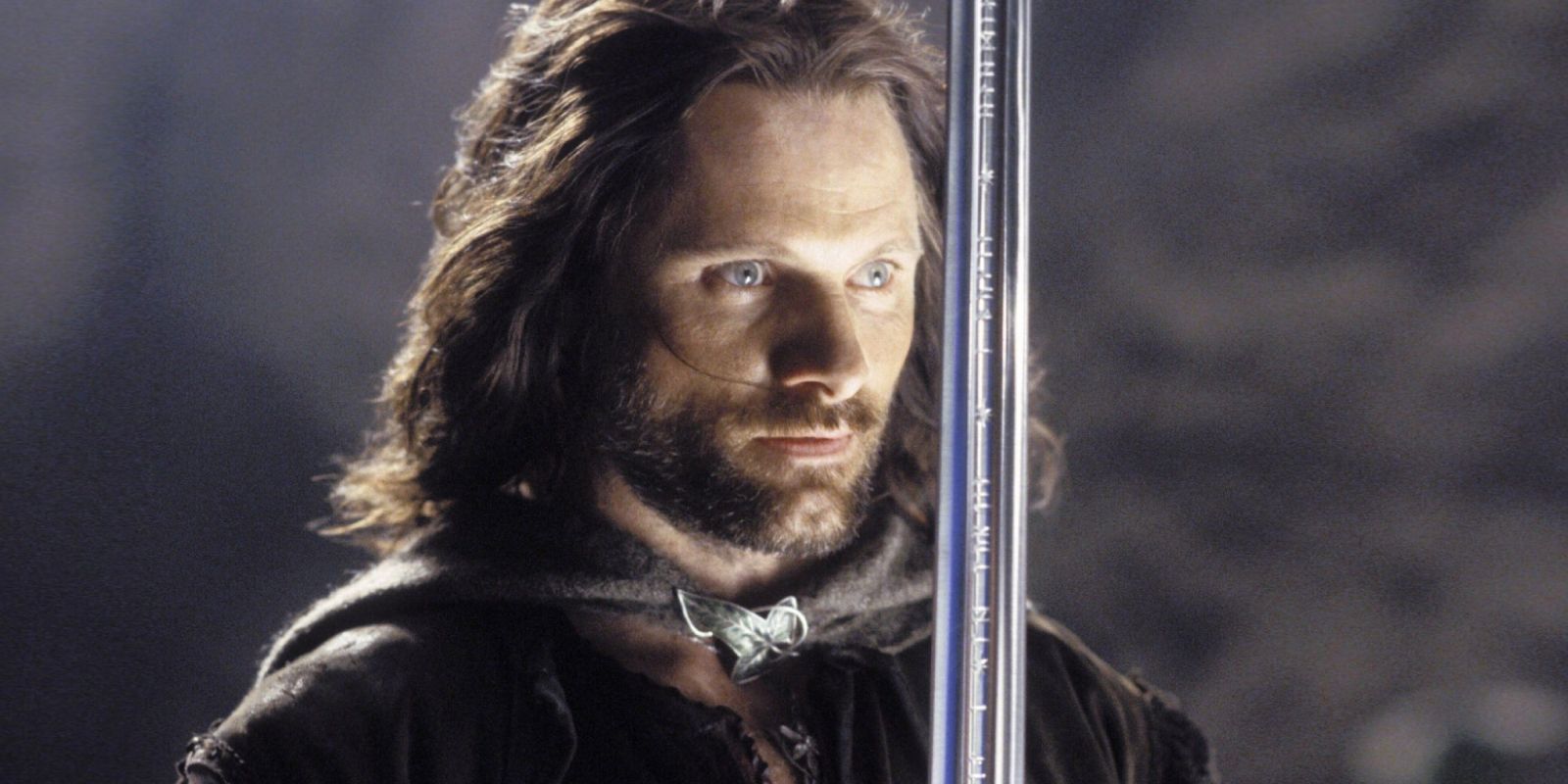
What else could go here, really? The Lord of the Rings is just unstoppable at this point, and has been since 2001. And then it got somehow even harder to stop after The Two Towers escalated the narrative and the sheer spectacle of it all, and then came The Return of the King, which was the high point in terms of action, and then it ended up being the most moving chapter of the trilogy, too.
The source material was massive, so three movies were needed here, and some would argue more time was required, especially since there are extended editions that take the trilogy’s length from a bit over nine hours to more like 11-ish. The Lord of the Rings was made as one big movie, and released in three parts, but it stands as a trilogy, and no, The Hobbit does not make it a six-part series. It’s its own trilogy. The Lord of the Rings stands alone, feels complete, and remains pretty much perfect.