






The Legacy of James Bond: A Look at the Series’ Strongest and Weakest Entries
For nearly six full decades, Eon’s James Bond series has served as the gold standard, and largely the template, for film franchises. Starting with the low-budget Dr. No in 1962, the films spearheaded by Albert “Cubby” Broccoli (and initially Harry Saltzman) have seen highs and lows without ever truly dipping in popularity in any substantial way. The diehard fandom and general film audiences alike await further developments from Amazon MGM’s reboot with Denis Villeneuve at the helm, and, frankly, this reinvention has considerable shoes to fill.
The purpose of the following list is to make it clear that even the absolute worst of Eon’s James Bond output were still pretty good movies. There’s no comparing the films on this list to something truly uninspired and hopeless like, say, The Marvels or The Flash. For this, we’re only taking into account the official Eon entries. The 1967 Casino Royale spoof and Never Say Never Again are both atrocious in ways none of the following films could even aspire to be. The disparity in quality is a testament to the Broccoli family’s remarkably tight quality control, something virtually every film franchise should take notes from.
‘No Time to Die’ (2021)
For most of its franchise-record runtime, No Time to Die seems on track to be one of the best films in the saga. Daniel Craig’s swan song sees the actor in confident form while the film around him makes considerable improvements to the lame and convoluted Spectre. The action is truly spectacular, and most of the major developments around Bond (notably that he’s fallen in love, and has a child) work splendidly.
Then, the ending hits, and it’s the worst of the franchise’s long history. A series of hammering, unconvincing events leads cinema’s ultimate survivor to an anticlimactic death. Perhaps there was a way killing Bond on screen could have worked; it’s something Ian Fleming had even toyed with in the books, but this isn’t it. Is a truly terrible ending enough to ruin an otherwise perfectly solid blockbuster film? No Time to Die proves the answer to that is, definitively, yes.
‘Die Another Day’ (2002)
Pierce Brosnan’s swan song has long been derided as one of the series’ lowest points, and while much of it plays out like a regrettable fever dream, Die Another Day has plenty to offer in terms of pure mindless entertainment. The series’ 20th entry and 40th anniversary inspired seemingly endless references in winks, so much that the outlandish science fiction plot concerning genetic experiments and space lasers took a back seat.
Die Another Day is pretty fun, though, if admittedly often in a so-bad-it’s-good kind of spirit. Brosnan was the only Bond actor who was flawless every moment he was on-screen. And though Die Another Day is too outlandish for its own good (and Toby Stephens is pretty insufferable as the cartoonish, smirking villain), the film has an exciting opening, a great swordfight, and two memorable Bond Girls in Halle Berry and Rosamund Pike.
‘Diamonds Are Forever’ (1971)
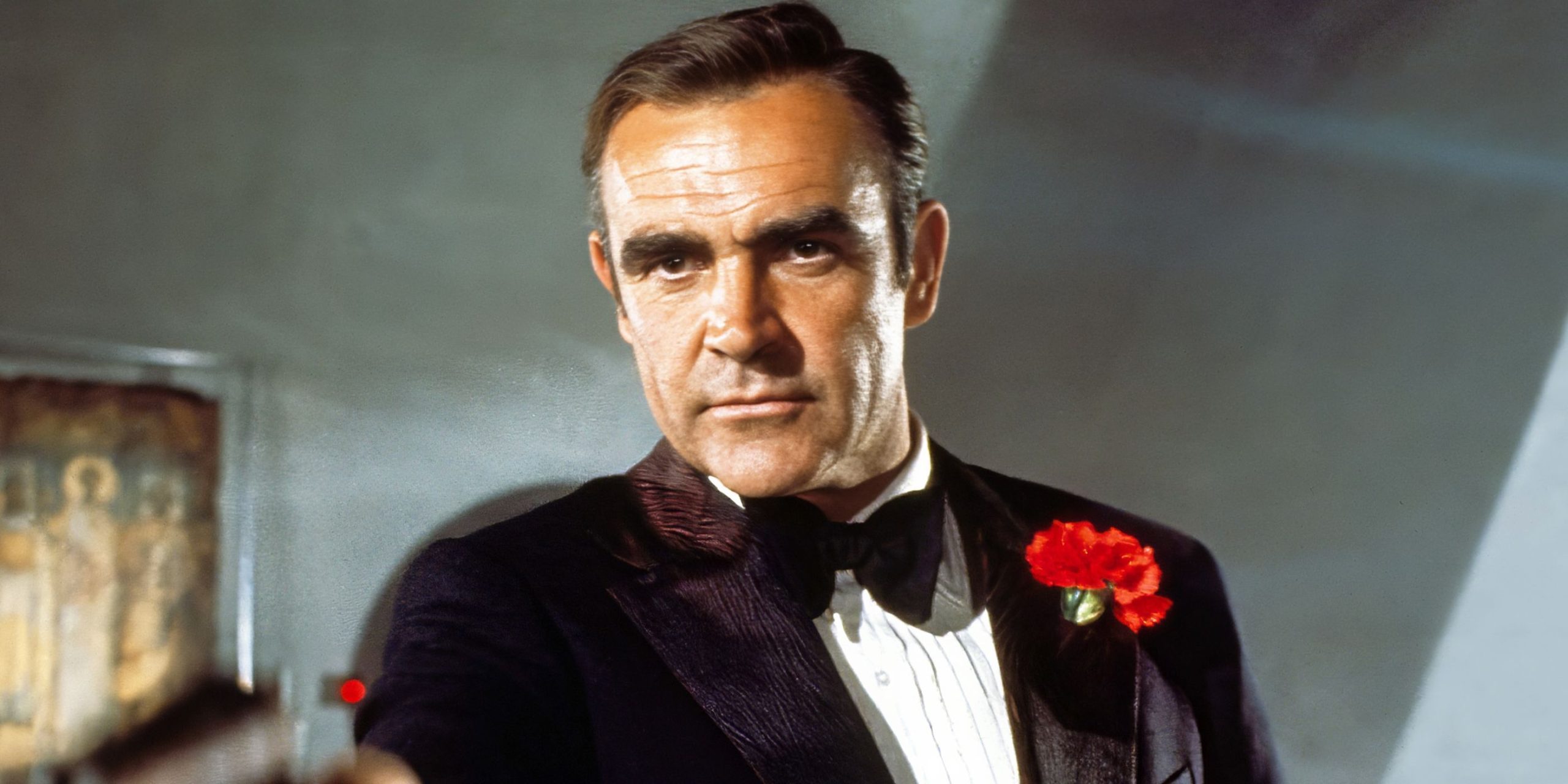
Eon producers spent a chunk of Diamonds Are Forever‘s budget on a returning Connery. He’s much better here than in You Only Live Twice, but the surrounding movie is uncharacteristically sleazy and cheap. After the relatively solemn On Her Majesty’s Secret Service underperformed with critics and audiences (it’s since been re-assessed as arguably the best of the series), producers swung at recapturing some of the Goldfinger magic (with much of the production team, including director Guy Hamilton, brought on board), but Diamonds is a pale and often cringey imitation.
Still, it’s hard to overstate how nice it is to have the star back for one final outing. Jill St. John is equally sexy and funny as Tiffany Case, and the movie is a breezy distraction so long as you measure your expectations. Just brace yourself for one of the most dated depictions of homosexual lovers imaginable. It’s so bad it feels like it must have been dated and tasteless in 1971.
‘Quantum of Solace’ (2008)
Casino Royale was so damned bloody good it frankly left the rest of the Craig era at something of a disadvantage. There was simply no way to top the action and emotional stakes of Martin Campbell’s masterpiece, and none of the other four movies even came particularly close. Though perhaps it’s worth mentioning it’s the product of a troubled production and writers’ strike, Quantum of Solace is a wan and disjointed affair that virtually no one anywhere has accused of being one of the better James Bond movies.
Mathieu Amalric has been good elsewhere, but he’s a misfire here as the series’ least intimidating big bad. Marc Forster was simply the wrong pick to direct; the action is impossible to follow at times, and attempts at arthouse flourishes are laughable. Still, Craig delivers arguably his second-best turn here, Gemma Arterton and Olga Kurylenko are solid Bond Girls, and some of the ways Quantum pays off from Casino Royale actually work.
‘The Man With the Golden Gun’ (1974)
Roger Moore deserves so much more credit than he gets for his Bond tenure. He successfully reinvented the character, and remained the people’s Bond for a record seven popular Eon outings. The Man With the Golden Gun is easily the least of these seven films, rushed and trashy in a way that led to box-office disappointment. There’s still plenty of pleasure in seeing Bond go toe-to-toe with assassin Francisco Scaramanga, with Christopher Lee delivering one of the richest and most convincing performances in the entire franchise.
Some will say Octopussy deserves on a list of the weaker Bond movies, but that is wrong. Octopussy is overall excellent. Some will say Moonraker and A View to a Kill belong here, but those movies are better than they get credit for so long as you’re willing to accept the camp, and the departure in tone from the peak of Connery’s era. The Man With the Golden Gun is the only Roger Moore Bond movie that’s a little rough to get through.
‘You Only Live Twice’ (1967)
Adapted from one of Fleming’s final works pretty much in name only, You Only Live Twice is stunning in so many ways, most of them technical, but dear God, this movie has aged badly. Worse than any other entry in the series by miles, in fact. Fleming’s novel of the same name is a grand revenge tale. You Only Live Twice the movie is a campy mess that feels like a spoof. It’s no coincidence this is the movie that Austin Powers: International Man of Mystery got most of its inspiration from. Why the hell did Roald Dahl write a Bond film?
Connery passing as a Japanese fisherman, cardboard supporting characters including a Bond Girl who barely even registers, and some awful effects make this one of the toughest Bond films to rewatch, but this is at least somewhat redeemed by an awesome finale featuring one of Ken Adam’s greatest feats of production design.
‘Spectre’ (2015)
Spectre was always going to be an uphill battle in the sense that it followed the single most successful (and in many ways, the most acclaimed, at least in its time) Bond film ever in Skyfall. It would appear Sam Mendes had simply run out of juice in some ways here. Following the uncommonly intimate Skyfall—a flawed but highly satisfying Bond outing with a focused scope—Spectre rips off the MCU’s interconnectedness, setting up story threads that leave casual viewers underwhelmed or puzzled, with diehard fans likely wanting to rip their hair out.
Still, if you’re willing to turn your brain off and enjoy the fireworks show, for all its faults and miscalculations, Spectre delivers as an action blockbuster. The Mexico City-set opening is technically impressive if tonally wobbly, and it’s hard to complain too much about a film which holds the record for the biggest explosion in film history. Spectre is passable as popcorn entertainment but a narrative failure, a reminder that the series really works best when these movies are only loosely connected, easy to watch out of order.