








Have you ever wished time would warp to your will, slowing through tough moments or fast-forwarding through the mundane? M. Night Shyamalan’s ‘Old’ thrusts us into this very concept, presenting a thrilling, visceral journey that transcends a typical horror narrative. The film is a profound, often unsettling, meditation on life’s relentless march, compelling its characters and audience alike to confront the fragility and preciousness of existence with every ticking second.
Much like finding a forgotten, intricate mechanism in an old home that suddenly demands your full attention, ‘Old’ unearths fundamental questions about life, loss, and the things we take for granted. It masterfully uses a seemingly idyllic setting to explore deeply unsettling truths, encouraging us to look closer at the details and the bigger picture simultaneously. From its captivating premise to the incredible journey of its creation, every ‘feature’ of this film contributes to a rich, thought-provoking narrative that lingers long after the credits roll.
Let’s unravel the cinematic tapestry of ‘Old’ and explore what makes it such a uniquely captivating and thought-provoking film. We’ll dissect the core elements that define this unforgettable M. Night Shyamalan experience, delving into its construction, its profound message, and the powerful performances that breathe life into its unsettling world. Prepare yourself to see time, and perhaps your own life, through an entirely new and perhaps disconcerting, perspective.

1. **The Unsettling Premise: A Beach That Steals Your Time**The central conceit of ‘Old’ is undeniably its most captivating and horrifying ‘feature’: a secluded beach where visitors rapidly age, experiencing the equivalent of one year of life every 30 minutes. Imagine stepping onto what appears to be a tropical paradise, only for it to become a relentless clock, accelerating your entire existence within a single day. This concept immediately establishes a palpable sense of dread and urgency, turning the serene into the sinister with terrifying efficiency.
This rapid aging isn’t just a plot device; it’s a constant, visible antagonist, manifesting in children suddenly becoming teenagers, and adults rapidly succumbing to the ravages of old age. The physical and psychological toll on the characters is immediate and devastating, forcing them to grapple with the loss of youth, health, and their very identities in real-time. It’s a powerful allegorical tool, making the abstract fear of aging vividly concrete and inescapable for everyone trapped on the sand.
The genius of this premise lies in its ability to tap into universal anxieties about mortality and the fleeting nature of time. We all feel time slipping away, but on this beach, it’s not a subtle shift; it’s an accelerating force that distorts perception and forces an immediate confrontation with our deepest fears. It demands that we, alongside the characters, consider what truly matters when every moment counts and the future is compressed into the terrifyingly immediate present.


2. **From Graphic Novel to Screen: The “Sandcastle” Inspiration**’Old’ didn’t spring entirely from M. Night Shyamalan’s singular imagination; it has a fascinating origin story rooted in the French-language Swiss graphic novel “Sandcastle” by Pierre Oscar Lévy and Frederik Peeters. Shyamalan himself received this graphic novel as a collective Father’s Day gift from his three daughters in 2017, a personal connection that highlights the profound impact the story had on him from the very beginning.
This adaptation beautifully showcases the enduring power of the original narrative, demonstrating how potent concepts can evolve beyond their initial medium. The graphic novel served as a rich foundation, presenting a compelling idea of individuals trapped in a rapidly aging environment, which Shyamalan then masterfully translated into his signature cinematic language. It’s truly inspiring to see how a powerful idea can be transformed and amplified through a different artistic lens.
Bringing ‘Sandcastle’ to the big screen allowed Shyamalan to infuse its powerful core idea with his signature blend of suspense, psychological depth, and visual storytelling. While the film undeniably bears his distinct directorial stamp, acknowledging its graphic novel heritage enriches our appreciation for the narrative’s strength and the collaborative spirit of artistic influence. It’s a compelling reminder that even the most original films often stand on the shoulders of captivating stories that came before.


3. **M. Night Shyamalan’s Masterful Direction and Unique Vision**M. Night Shyamalan is a filmmaker known for his distinctive voice, and ‘Old’ is a resounding affirmation of his commitment to original, thought-provoking cinema. In a statement, Universal Pictures President Peter Cramer lauded Shyamalan’s projects for containing “highly original stories,” a sentiment echoed by Shyamalan himself, who emphasized that “original films are crucial to the longevity of the theatrical experience.” This dedication to unique narratives is palpable in every frame of ‘Old,’ cementing his reputation as a director who dares to be different.
Shyamalan’s directorial choices in ‘Old’ are deliberately crafted to enhance the film’s claustrophobic and unsettling atmosphere. He openly drew inspiration from films created during the Australian New Wave, such as ‘Walkabout’ (1971) and ‘Picnic at Hanging Rock’ (1975), as well as classics like ‘The Exterminating Angel’ (1962) and ‘Rashomon’ (1950) by Akira Kurosawa. This eclectic mix of influences reveals a sophisticated approach to building tension and trapping the audience within the characters’ plight.
Shyamalan’s directorial approach, characterized by meticulous storyboarding for every shot and what his daughter Ishana describes as a “very prescribed and programmatic” method, ensured exceptional precision in the filmmaking process. This detailed planning enabled him to guide his actors not only through their characters’ physical transformations but also into the depths of their emotional journeys, forging a cohesive and intensely focused narrative. It’s this controlled, almost surgical, execution of every detail that imbues his films, including ‘Old,’ with such a distinctive and impactful resonance.

4. **The Heart of the Story: An Ensemble Cast’s Transformative Performances**The terrifying premise of ‘Old’ would be nothing without the nuanced and committed performances of its ensemble cast. Actors like Gael García Bernal and Vicky Krieps, playing the estranged couple Guy and Prisca Cappa, anchor the film with their portrayal of a relationship tested to its absolute limits by the relentless passage of time. Their journey, from marital discord to profound reconciliation in their final moments, is deeply moving and serves as the emotional core of the film.
Beyond the central couple, the cast delivers incredible depth to a diverse group of characters. Rufus Sewell as Charles, the schizophrenic cardiac surgeon, and Abbey Lee as his trophy wife Chrystal, bring a volatile tension to the beach. Alex Wolff and Thomasin McKenzie, who portray the rapidly aging Trent and Maddox Cappa, face the unique challenge of depicting significant age progression and profound emotional shifts within a compressed timeframe, a task they perform with remarkable authenticity.
Nikki Amuka-Bird as Patricia Carmichael, the epileptic psychologist, and Ken Leung as Jarin Carmichael, her nurse husband, offer another layer of human connection and vulnerability. Each actor is tasked with embodying not just a character, but the accelerated decay of a human life, a process Shyamalan meticulously guided. Alex Wolff commented on the director’s method, stating, “Night would just guide you where you needed to be emotionally, and then it would happen naturally,” highlighting the director’s skill in eliciting these transformative performances.


M. Night Shyamalan himself stated that ‘Old’ is “definitely about our relationship to time and, in my opinion, our dysfunctional relationship to time that we all have,” revealing the film’s central theme. This profound exploration invites viewers to deeply consider their own perceptions and valuation of each passing moment. The characters stranded on the beach are subjected to an involuntary, accelerated contemplation of their lives, ultimately exposing what holds true significance when faced with an unforgiving clock.
As the characters rapidly age, some struggle to navigate the chaos, consumed by fear and regret, while others, remarkably, “find peace.” Shyamalan challenges us to consider why and how some find this serenity amidst such extreme circumstances. It’s a powerful conversation about introspection, resilience, and the human capacity to connect and make amends even in the face of imminent oblivion. This resonates particularly in a world where external pressures often distract us from internal reflections.
Various cast members also offered their interpretations, further enriching the film’s thematic tapestry. Alex Wolff likened it to the COVID-19 pandemic, where “it feels like time just stopped,” calling the film “an allegorical existential sort of meditation on getting older.” Vicky Krieps emphasized themes of “love and family and all these things that are much stronger than any fears — the fear of aging and the fear of death.” These insights collectively underscore the film’s profound and universal appeal.

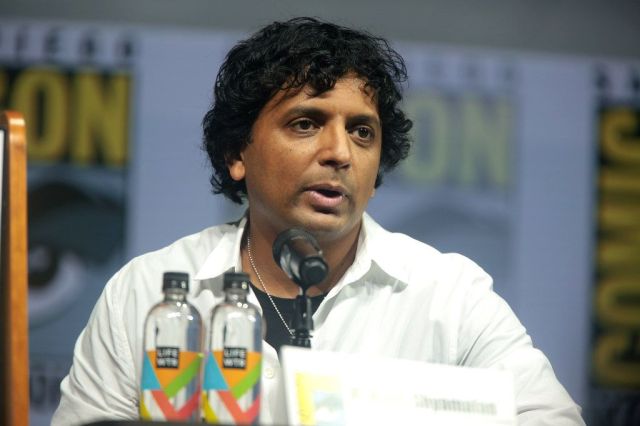
6. **The Breathtaking, Yet Claustrophobic, Dominican Republic Setting**The primary setting for ‘Old’—Playa El Valle beach in the Dominican Republic—is a character in itself, embodying both paradise and prison. Critics, like Richard Roeper, described the main location as “absolutely breathtaking,” a sentiment easily understood by anyone who sees its pristine sands and clear waters. This natural beauty, however, is cunningly juxtaposed with the insidious horror that unfolds, turning a dream vacation spot into a nightmare trap.
Shyamalan intentionally selected this location, situated between two mountains on the north coast of Santa Bárbara de Samaná, to create a “claustrophobic feeling.” The geographical confinement, with escape seemingly impossible due to the surrounding mountains and water, perfectly reinforces the characters’ predicament. The irony of being trapped in such a stunning, open environment heightens the psychological distress, making the setting as much an antagonist as the rapid aging itself.
Additional filming also took place at Pinewood Dominican Republic Studios and other locations around Samaná, further immersing the production in this vibrant Caribbean environment. The visual contrast between the lush, vibrant natural world and the accelerating decay of human life provides a constant, unsettling tension, making the audience keenly aware of the beautiful, yet deadly, stage upon which this human drama unfolds.
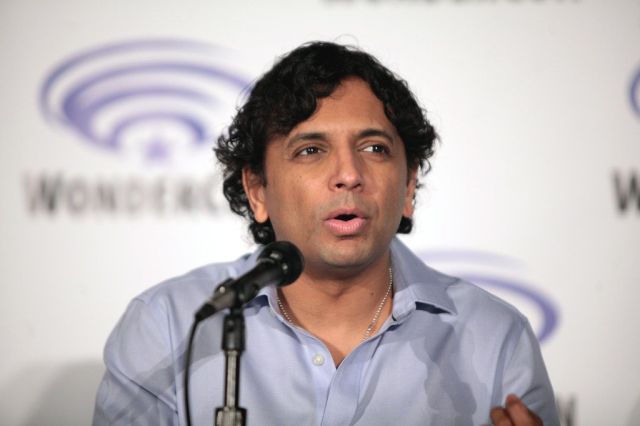
7. **Against All Odds: Filming “Old” During a Global Pandemic**The production of ‘Old’ is a remarkable story of perseverance, as principal photography began in the Dominican Republic on September 26, 2020, squarely in the midst of the COVID-19 pandemic. This extraordinary circumstance added layers of complexity and challenge to an already ambitious project. Shyamalan proudly noted that ‘Old’ was the first film to be shot during the pandemic in the Dominican Republic, a testament to the dedication and meticulous planning involved.
To ensure the safety and well-being of his cast and crew, Shyamalan implemented stringent protocols, including paying for the production crew’s ten-week stay at a hotel. This commitment paid off, as he reported that throughout the entire shoot, “no one tested positive for the virus.” This accomplishment highlights the extraordinary efforts required to continue filmmaking safely during a global health crisis, demonstrating a remarkable blend of artistic drive and responsible leadership.
Beyond the logistical challenges, the pandemic subtly informed the film’s themes, making them even more resonant. As Alex Wolff observed, “Coming out of COVID, it feels like time just stopped. And that’s what the movie’s literally about.” The real-world experience of altered time and isolation undoubtedly lent a deeper, more immediate weight to the film’s exploration of our relationship with time, blurring the lines between fiction and a shared global reality.
8. The terrifying pace of time on the cursed beach in ‘Old’ is made even more harrowing by a chillingly specific detail: many of the characters grapple with pre-existing medical conditions, turning their rapid aging into a desperate race against their bodies’ unique vulnerabilities. This isn’t merely about generalized decay; it’s the horrific acceleration of specific ailments that makes the horror intensely personal and immediately visceral for each individual, with these conditions acting as cruel accelerants in their desperate fight for survival.
Consider Prisca Cappa, who suffers from a benign, slow-growing ovarian tumor, or Brendan, the rapper, whose hemophilia means even a minor cut could be fatal. Charles, the surgeon, grapples with schizophrenia, while his wife Chrystal battles hypocalcemia, a condition affecting her bones. Patricia Carmichael, the psychologist, lives with epilepsy. These are not just character traits; they are ticking time bombs, amplifying the dread as each character realizes their specific vulnerability will be catastrophically magnified by the beach’s temporal anomaly.
The film masterfully showcases the grotesque progression of these conditions. Prisca’s tumor, which would normally take years to become problematic, expands to a life-threatening size in mere hours, requiring Charles to perform an emergency surgery on the beach itself. Brendan’s hemophilia leads to nosebleeds that rapidly worsen, while Chrystal’s hypocalcemia causes her bones to rupture and heal improperly, gruesomely contorting her body. Patricia’s epilepsy escalates to a fatal seizure. Each of these accelerated medical crises adds a layer of specific, tangible horror, transforming abstract aging into agonizing, personalized torment.
This meticulous focus on individual medical conditions serves to ground the fantastical premise in a disturbing realism, reminding us of the fragility of the human body and the constant, often hidden, battles we fight. The beach doesn’t just age; it weaponizes existing frailties, pushing the characters, and the audience, to confront the terror of their own biological clocks winding down at an impossible speed. It’s a stark, unsettling reminder of how quickly our lives can change when our health falters.
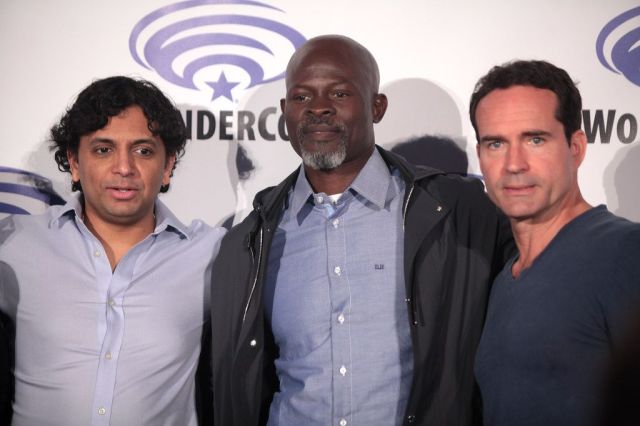
9. **Tragic Arcs: A Journey Through Compressed Lives**Within the harrowing confines of the rapidly aging beach, ‘Old’ unfolds a series of profoundly tragic character arcs, each serving as a poignant, compressed narrative of life, loss, and the desperate search for meaning. The film doesn’t just depict physical decay; it meticulously charts the emotional and psychological disintegration, or sometimes, the unexpected blossoming, of its characters as their relationships and individual destinies are pushed to their breaking points within a single, horrifying day. It’s a masterclass in showing how quickly lives can be lived, and lost.
The most disturbing examples of accelerated tragedy are often seen in the younger characters. Kara, Charles and Chrystal’s daughter, rapidly ages into her late teens, and in a desperate, primal act, becomes pregnant, only for the baby to starve to death moments after birth due to the beach’s accelerated timeline. Agnes, Charles’s elderly mother, dies very early on, highlighting the immediate and unforgiving nature of the beach’s power. Jarin, Patricia’s husband, drowns while attempting to swim for help, a futile act of heroism. Each death is not just a plot point, but a stark illustration of the beach’s merciless grip.
Amidst the chaos and despair, the journey of Guy and Prisca Cappa forms the emotional backbone of the film. Initially estranged and contemplating divorce, their relationship is intensely tested by the beach’s accelerating time. As they age, they are forced to confront their past, their love, and their regrets. Their final moments, dying peacefully side-by-side of natural causes, mere moments apart, offer a deeply moving, if bittersweet, reconciliation, suggesting that even in the face of absolute horror, love and forgiveness can endure, providing a quiet dignity to their end.
However, the story does not end with universal demise. Guy and Prisca’s children, Maddox and Trent, who age into middle-aged adults, embody a resilient spirit. Having witnessed the loss of everyone they knew, they construct a sandcastle, a poignant act reminiscent of their childhood, and piece together a secret message from Idlib, the resort manager’s nephew. This message, a clue to an underwater coral passage, ignites a final, desperate hope for escape, turning their individual tragedies into a collective fight for survival and justice.
These intertwined narratives, from instant demise to a final act of heroic revelation, underscore the film’s profound allegorical power. They force both the characters and the audience to consider the fleeting nature of life, the importance of present moments, and the profound impact of human connection in the face of inevitable oblivion. The film doesn’t just tell a story of aging; it tells a story of lives lived, for better or worse, in the blink of an eye.
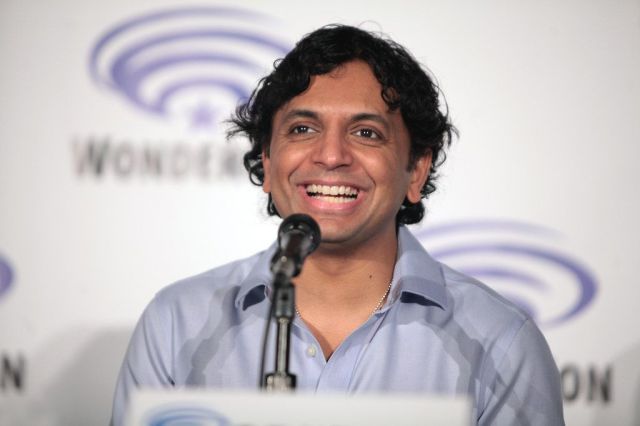
10. **The Controversial Revelation: Unmasking the Beach’s Purpose**M. Night Shyamalan is renowned for his signature twist endings, and ‘Old’ delivers one that proved to be particularly polarizing, either providing a satisfying, if chilling, explanation for the beach’s inexplicable powers or, for some, undermining the raw existential horror that preceded it. The mystery of the accelerating beach hovers over the entire film, a constant question mark that demands an answer, and the film ultimately pulls back the curtain to reveal a truly disturbing truth that anchors the supernatural premise in a horrifyingly human endeavor.
This pivotal discovery unfolds as Trent and Maddox, now adults, find a notebook left behind by a previous traveler, detailing the names of those who perished on the beach and, more disturbingly, hinting at constant surveillance. This revelation shifts the perceived random horror into a meticulously orchestrated event, introducing a layer of insidious human malevolence to the natural terror of accelerated time. The implication is chillingly clear: this nightmare is not accidental, and someone has been pulling the strings for a long time.
The full scope of the twist is unveiled when Trent and Maddox, having deciphered a secret message from Idlib about an underwater coral passage, manage to escape the beach without losing consciousness. They encounter a resort employee, who, believing them dead, reports their demise to the manager. It is then revealed that the idyllic resort is merely a front for a research team from a pharmaceutical company called Warren & Warren. This team has been conducting underground clinical trials of new medical drugs, administered to guests with pre-existing conditions by spiking their complimentary drinks.
The horrifying genius of the beach, from the researchers’ perspective, is its natural ability to accelerate the lives of guests. This allows them to complete lifelong drug trials, observing the long-term effects of their medications, all within the span of a single day. The beach transforms from a random natural anomaly into a highly efficient, morally bankrupt laboratory, making the characters not victims of fate, but unwitting subjects in a monstrous human experiment. This cold, calculated cruelty shifts the film’s horror from the supernatural to the scientific, exposing a darker side of human ambition.
Trent and Maddox, armed with the notebook as irrefutable evidence, expose these crimes to a vacationing police officer, Greg Mitchel. The researchers are subsequently arrested, and subpoenas are sent to the rest of Warren & Warren, bringing a semblance of justice to the horrific events. While some critics found this explicit explanation less satisfying than the graphic novel’s ambiguous ending, the twist firmly roots the film’s terrifying premise in a chilling commentary on corporate ethics and the exploitation of human life, transforming a surreal nightmare into a tangible, man-made evil.
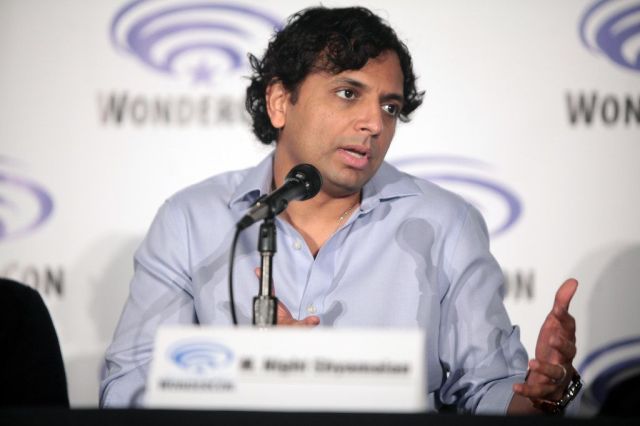
11. **Michael Gioulakis’s Distinctive Cinematography**Beyond the gripping narrative and intense performances, ‘Old’ is a visually striking film, largely thanks to the masterful cinematography of Michael Gioulakis. His work is instrumental in crafting the film’s unique aesthetic, transforming what could have been just a horror story into a deeply unsettling visual experience. Using 35mm film, Gioulakis imbues the movie with a raw, almost tactile quality that heightens the sense of realism and immediate dread, making the beauty of the setting all the more ironic and sinister.
Gioulakis’s approach, guided by Shyamalan’s meticulous storyboarding, creates a distinct visual language that supports the film’s core themes. Critics like Richard Brody noted that “with spare methods and sharp images, the director turns a simple premise into potent fantasy.” This precision in framing every shot ensures that the audience is constantly aware of the characters’ confinement, even within the vastness of the beach. The camera often feels like an unseen observer, trapping us with the characters as their lives rapidly unfold.
The stunning natural beauty of Playa El Valle in the Dominican Republic, described by critics as “absolutely breathtaking,” becomes a crucial visual element. Gioulakis expertly captures the pristine sands, clear waters, and lush surroundings, contrasting this idyllic paradise with the accelerating decay of human life. This juxtaposition creates a constant, unsettling tension, making the environment itself a silently complicit antagonist. The vibrant, life-affirming backdrop only emphasizes the horror of rapid death unfolding upon it.
Shyamalan intentionally sought a “claustrophobic feeling,” a vision Gioulakis realized through strategic camera placement and composition. Inspired by films like Akira Kurosawa’s ‘Rashomon,’ the cinematography helps to create an inescapable atmosphere. The visual storytelling reinforces the idea that there is no escape from this beautiful prison, no angle that offers a way out. Every frame is carefully constructed to immerse the viewer in the characters’ desperate plight, making the visual experience as integral to the horror as the plot itself.
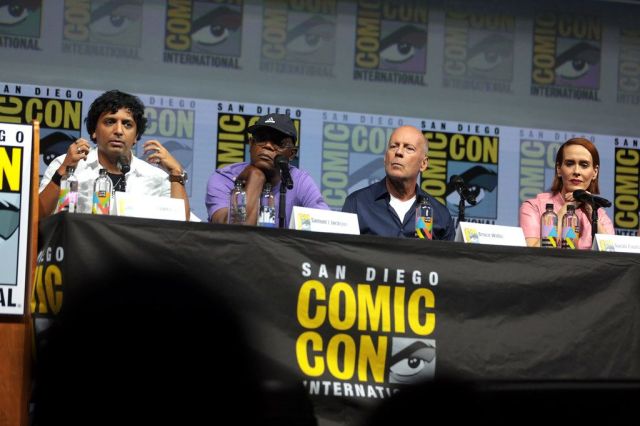
12. Upon its release, ‘Old’ ignited a fervent and divided critical conversation, ultimately landing in the ‘mixed or average’ camp, a fate common for M. Night Shyamalan’s uniquely polarizing cinematic style. While the film garnered a 50% positive rating on Rotten Tomatoes from 344 critics, averaging 5.50/10, and a Metacritic score of 55 out of 100, audiences polled by CinemaScore awarded it a middling “C+”. This broad spectrum of reactions underscores the film’s polarizing nature, capable of either deeply captivating or intensely frustrating its viewers with little room for lukewarm reception.
Much of the criticism was leveled at the film’s screenplay and dialogue. Wendy Ide of The Observer described the exposition as “ponderous and mannered” and questioned the believability of the characters. Alissa Wilkinson from Vox opined that “Shyamalan has not grown any more skilled at writing dialogue over the years,” while Barry Hertz of The Globe and Mail criticized the “stilted dialogue that runs in circles, dumb-dumb plot holes, [and] a bizarre determination to have his performers act as unnaturally as possible.” These comments underscored a common sentiment that the writing, at times, undermined the powerful premise.
Conversely, the film’s unique premise and striking cinematography received considerable praise. Jocelyn Novec of the Associated Press, despite general criticism, acknowledged its “enticing premise and pretty scenery.” Richard Roeper found the main location “absolutely breathtaking,” and Pete Hammond remarked that the “stunning location should give audiences a nice respite from the heat.” Richard Brody of The New Yorker lauded how “with spare methods and sharp images, the director turns a simple premise into potent fantasy,” highlighting the visual and conceptual strengths.
The film’s much-anticipated twist ending proved to be a significant point of contention. Some critics, like Alissa Wilkinson, preferred the graphic novel’s more ambiguous conclusion, finding Shyamalan’s explicit explanation less satisfying. Peter Travers of ABC News was “shocked” by how “clumsily [Shyamalan] handles potent themes about sudden death and the collapse of time.” However, Glenn Kenny of The New York Times praised Shyamalan’s “fluid filmmaking style” and the “seamless” way he switched actors for aging characters, even if he felt the ending didn’t quite “stick the landing.”
Interestingly, some critics found enjoyment in the film’s darker elements and unusual tone. Germain Lussier of Gizmodo described the movie as being made with “sadistic glee and surprising emotion,” while Nick Allen of The Playlist called it a “pitch-black comedy and self-aware horror.” Scott Mendelson of Forbes, in turn, labeled it a “relentless and mean little chiller,” suggesting that for some, the film’s unconventional approach and unflinching horror were precisely what made it compelling, cementing its status as a divisive but undeniably thought-provoking piece of cinema.

13. **The Unpredictable Journey: “Old”‘s Box Office Performance**In the challenging landscape of 2021, ‘Old’ embarked on a fascinating box office journey, ultimately proving M. Night Shyamalan’s continued draw as a genre filmmaker. Despite being released during a period of uncertainty for theatrical experiences due to the lingering effects of the COVID-19 pandemic, the film managed to carve out a respectable financial success, grossing a worldwide total of $90.2 million against a modest budget of $18 million. This performance underscored its appeal to a dedicated audience eager for original, suspenseful storytelling.
The film debuted in the United States on July 23, 2021, making $6.9 million on its first day and opening to $16.85 million for the weekend across 3,355 theaters. This strong start allowed ‘Old’ to top the box office, becoming Shyamalan’s sixth film to do so. However, it also marked the lowest opening weekend of his career, a testament to the ongoing struggles of the theatrical market, even as it outperformed its direct competitors like ‘Snake Eyes’ and ‘Joe Bell’ that same weekend. The audience demographic was noted as 52% female and 62% aged 25 or older.
Following its opening, the film experienced a significant 60% decline in its second weekend, grossing $6.86 million, and continued to drop in subsequent weeks. This trend led Michael Cieply of Deadline Hollywood to propose a theory of “screen fatigue,” suggesting that audiences, as a collective, were simply tired of consuming media on screens, whether at home or in theaters. This insightful analysis highlighted the broader cultural context impacting film performance during the pandemic era, positioning ‘Old’ as a case study in audience behavior.
Despite the domestic fluctuations, ‘Old’ demonstrated a solid international presence. In its opening weekend across 23 markets, it grossed $6.5 million, with Russia ($2.1 million), the United Kingdom ($1.1 million), Mexico ($800,000), Italy ($600,000), and France ($500,000) leading the charge. This global appeal continued into its second and third weekends, bringing in $7.5 million and $4.4 million respectively, even with a $1.2 million opening in Spain. The film continued to screen in numerous foreign markets for several weeks, underscoring its ability to resonate with diverse audiences worldwide.
Even facing challenges such as a limited Korean opening in only 453 theaters due to local film preferences, ‘Old’ maintained its presence on the global stage. Its sustained performance, even if modest in later weeks, solidified its position as a profitable venture for Universal Pictures and M. Night Shyamalan, proving that original, mid-budget thrillers still have a vital place in the cinematic landscape, especially when backed by a director with a distinct vision and a knack for compelling, conversation-starting narratives.

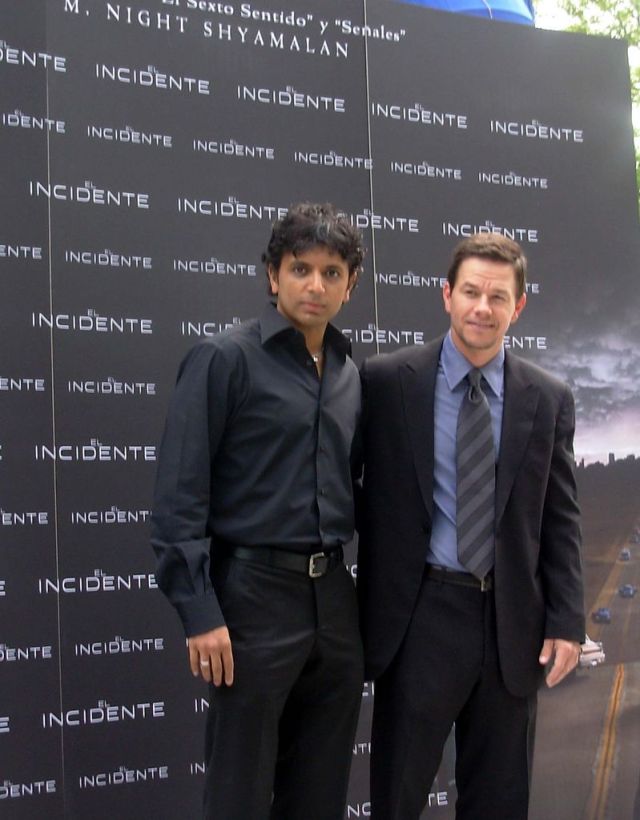
14. **A Family Affair: Shyamalan’s Daughters’ Creative Contributions**M. Night Shyamalan’s ‘Old’ is not just a testament to his singular vision, but also a beautiful example of collaborative filmmaking, particularly within his own family. The film’s very genesis, as a Father’s Day gift of the graphic novel ‘Sandcastle’ from his three daughters in 2017, established a deeply personal connection to the material. This familial bond extended beyond inspiration, becoming an integral part of the production itself, showcasing how creative talents can run in the family and enrich a project from concept to final cut.
The film benefited significantly from the involvement of Ishana Shyamalan, M. Night’s daughter, who served as the second unit director. Her role was crucial in capturing the surrounding natural landscapes, which became almost a character in themselves, embodying both the allure and the entrapment of the beach. Her artistic eye ensured that the stunning yet menacing environment was meticulously framed and woven into the narrative, providing the visual counterpoint that amplified the film’s deeply unsettling atmosphere, showcasing a remarkable intergenerational artistic synergy.
Another of Shyamalan’s daughters, Saleka Shyamalan, contributed her musical talents to the film, composing an original song titled “Remain.” This poignant piece was deeply inspired by the themes of marriage vows and drew inspiration from iconic songs like U2’s “With or Without You.” Her composition was specifically crafted to “highlight the relationship between Guy and Prisca and the love that exists between them,” adding an emotional layer to the central couple’s journey as they face their accelerated demise. Her music serves as a powerful underscore to the film’s exploration of enduring love in the face of insurmountable odds.
These significant contributions from his daughters transform ‘Old’ into more than just a suspenseful thriller; they infuse it with a profound personal resonance, bridging the gap between its initial inspiration and its ultimate execution. The film truly becomes a “Shyamalan Family Business,” as highlighted in the special features of its digital release, underscoring the deep care, passion, and collaborative spirit that went into bringing this unique story to the screen. It’s a touching reminder that creative endeavors can be deeply familial, drawing strength and unique perspectives from those closest to us.
‘Old’ serves as a potent reminder that some stories possess a power that extends far beyond the cinema screen, embedding themselves in our consciousness and challenging our fundamental perceptions of life. From its unnerving premise and complex thematic layers to the outstanding performances and meticulous directorial craft, every facet of the film converges to create an experience that is both terrifying and profoundly thought-provoking. It’s a testament to cinema’s ability to mirror our deepest anxieties, compelling us to confront the relentless passage of time and re-evaluate what truly matters when every second counts, solidifying M. Night Shyamalan’s mastery of crafting resonant narratives that invite us to truly *experience* existence.